
Across Massachusetts, the blizzard in February 2026 took down both trees and power lines with heavy, wet snow. If a tree falls on power lines, who is responsible depends on the wire it touches and the utility company that serves your town. Some of that work can land on you, as the homeowner.
Remember: A tree on a line can be live, so stay at least 30 feet back and call 911 before anything else.
Key Takeaways
- If a wire is down, stay at least 30 feet away and call 911 before you call anyone else.
- In Westborough and Northborough, National Grid trims around high-voltage wires, and you handle branches near the service drop to your home.
- Shrewsbury is served by SELCO, which holds owners accountable for trimming trees on private property.
- Trees along the public way are public shade trees, and only the tree warden, or someone with the warden’s written permit, can cut, trim, or remove them (trees on numbered state highways are handled by MassDOT).
- Work within 10 feet of energized lines needs an electric-qualified crew, and National Grid asks for at least five days’ notice, so winter is a good time to schedule it.

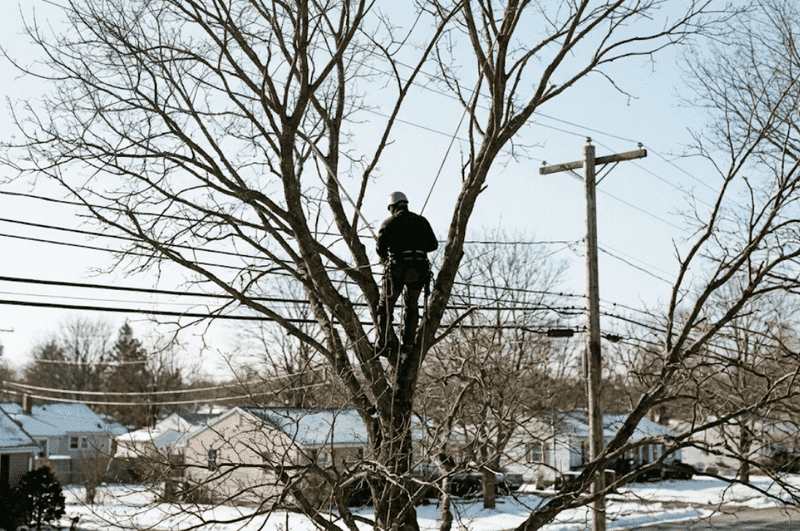
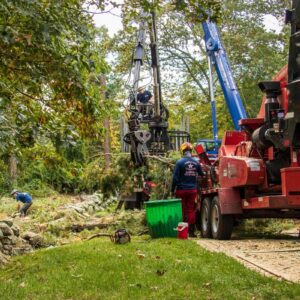
The American Climbers crew uses a grapple saw to remove a tree near power lines.
Who Is Responsible for Trees Near Power Lines?
The utility company is responsible for its wires and restoring service. You, the owner of the tree, are responsible for the tree and the wood it leaves behind. That means different things for different towns:
- National Grid (Westborough, Northborough): It doesn’t remove debris from storm-related emergency work, and its tree-care brochure says cleanup of storm debris remains the tree owner’s responsibility, whether the tree is public or private.
- SELCO (Shrewsbury): It reinstalls the service and clears the limb.
- You : You arrange the removal of the tree and the wood.
If you’ve previously turned down utility tree work, National Grid may have had you sign a statement accepting liability for any resulting damages. Who removes a fallen tree once the wires are safe is a whole other question.
Who Is Responsible for Trees Near Power Lines Before They Fall?
Responsibility is split a few ways, and the rules differ depending on the utility company. Here is who handles what:
- National Grid (Westborough, Northborough: It handles utility line clearance by trimming around its high-voltage wires, but it isn’t responsible for trees threatening your service drop, telephone, or cable wires.
- SELCO (Shrewsbury): It holds owners accountable for trimming trees on private property.
- You: In National Grid towns, you handle trees and branches near your service drop, and in Shrewsbury, trees on private property. In both, you arrange professional work with an electric-qualified tree crew rather than climbing up there yourself.
- Your town: It manages public shade trees, meaning trees within the public way or on its boundary. Only the tree warden may cut, trim, or remove one, with a written permit, and utilities working on them go through the warden too. Trees on numbered state highways are under MassDOT’s care and control instead.
If the tree sits along the road, tell your utility company and ask your town who the tree warden is before you hire a crew.
Why Are Trees Near Power Lines Dangerous?
Trees near power lines are dangerous because wood can conduct electricity, especially when wet, and the risk shows up in two ways:
- A fallen tree can have a wire caught in it, so the danger is not always visible.
- Storms like the February blizzard leave exactly that mix of wet wood and damaged lines.
What Should You Do If a Tree Falls on Power Lines?
Stay far away, call 911, and then call your utility. Only bring in a tree crew once the utility says the lines are safe. Keep the following steps in mind:
- Stay at least 30 feet away from any downed wire and call 911. Keep everyone back and do not touch the tree or anything touching it, because you cannot tell by looking whether it is live. If you can do it from a safe distance, tell the dispatcher where the wire is.
- Call your utility once 911 is on the way. On the phone, give them your address, and say that a tree is on or near the line.
- Bring in tree care professionals once the utility confirms the lines are de-energized. Our emergency tree service can take over from there, and you should arrange the cleanup as soon as the utility clears the site.
Who Should Handle Cutting and Trimming Trees Near Power Lines?
Electric-qualified tree care professionals should handle any cutting or trimming of trees near power lines, and there are a couple of standards that support that:
- Safety Rule: Line-clearance tree trimming counts as work within 10 feet of energized lines, and unqualified workers must keep at least 10 feet away.
- Utility Expectation: National Grid expects the contractor’s workers to be trained for work within 10 feet of electrical hazards.
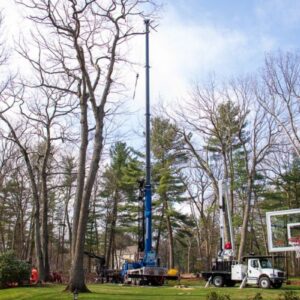
Either way, this isn’t work you should try to do yourself or for a general landscaping crew. Depending on accessibility and tree size, the crew may climb and remove the tree in sections. In certain situations, a crane is the only tool that makes sense. In National Grid towns, the utility also prefers at least five days’ notice before planned work near lines.
PRO TIP: Before you hire a crew, ask whether its workers are trained to work within 10 feet of electrical hazards, and who will give the utility its five days’ notice.
Why Is Winter a Good Time to Deal With Trees Near Power Lines?
Winter is a good time to deal with trees near power lines because several things (the pruning window, utility’s lead time, and equipment access) all line up:
- Pruning Window: Late-winter pruning wounds generally heal faster during spring growth and are less open to pests.
- Lead Time: The five-day utility notice means starting early rather than waiting for the first storm.
- Easier Access: Frozen ground gives equipment stable footing, and bare branches leave fewer obstacles, which suits work on dead or dormant trees.
If you’re planning pruning near your power lines, settle when to prune trees in Massachusetts early, and definitely before our schedule fills up.
Frequently Asked Questions About Trees Near Power Lines
Can I wait until late winter to deal with a hazardous limb near a line?
No. Hazardous, dead, or infested limbs should come off whenever necessary, in any season, because winter timing only applies to routine pruning.
Will National Grid trim a tree near my lines if I ask?
Usually not. National Grid trims around high-voltage wires on a five-to-seven-year cycle and does not trim outside that schedule unless a significant hazard is affecting the wires. Extra pruning beyond its schedule is at your own expense.
Can the utility shut off a wire during tree work?
Sometimes. In National Grid towns, you can ask the utility to temporarily disconnect your service entrance wire from your home for your contractor. In Shrewsbury, SELCO will de-energize utility lines if safety is in question while trimming.
Does Massachusetts have its own rule for working near power lines?
Yes, and the distance is six feet: anyone responsible for work within six feet of overhead high-voltage lines must promptly notify the utility or company that owns or operates them. That does not replace the 10-foot federal distance for unqualified workers, which is the stricter limit.
Let American Climbers Take Care of the Trees Near Your Power Lines
If a tree on your property is near a power line, request a quote from American Climbers and we’ll plan the job around your utility’s rules, whether you need tree pruning and trimming or removal. We provide tree service in Westborough and nearby towns.
Blog Topics
Recent Posts

What's Happening? Stay Informed!
Stay on top of local events, pest and disease updates, tree and landscape tips, and more. Delivered straight to your inbox each month.