

Every year, homeowners wait too long to deal with a dying tree – until winter storms make the job harder, riskier, and more expensive. If you’ve been putting it off, late fall is your best chance to take care of it while conditions are safer and before crews book up for winter emergencies.
Key Takeaways
- Book tree removal now before winter storm delays create weeks-long backlogs and emergency-only availability throughout MetroWest.
- Narrow streets in Weston, Dover, and Sherborn become nearly impossible for crane and equipment positioning once snow accumulates.
- Planned removal costs significantly less than emergency removal after winter storm damage.
- Frozen ground helps heavy equipment access, but scheduling gets booked solid once winter weather patterns establish.
- American Climbers works year-round and has the specialized equipment to handle MetroWest’s unique winter challenges.
Why Late Fall is the Best Time for Tree Removal
Many MetroWest homeowners assume tree removal has to wait until spring, but that’s not the case. Late fall often provides ideal conditions for getting the work done efficiently and safely.
At American Climbers, we work year-round and have found that late fall frequently offers the best window for tree removal. With leaves off the trees, our crews have better visibility and easier access. Ground conditions are also usually firm, allowing equipment to be positioned safely without damaging lawns or driveways – something that’s much harder to avoid during wet spring months.
“We’ve been doing winter tree work in MetroWest for over 25 years, and laate fall is often a busy time for us. That’s because most homeowners prefer to book their tree removal before the unpredictable winter weather creates scheduling bottlenecks and access problems. After the snow falls, even simple removals become complex logistical challenges.” – Rich Yurewicz, Owner of American Climbers
The real advantage of scheduling in late fall in predictability. You can plan around short, clear weather windows, and if a storm delays your project, it’s usually by a day or two – not weeks or months.
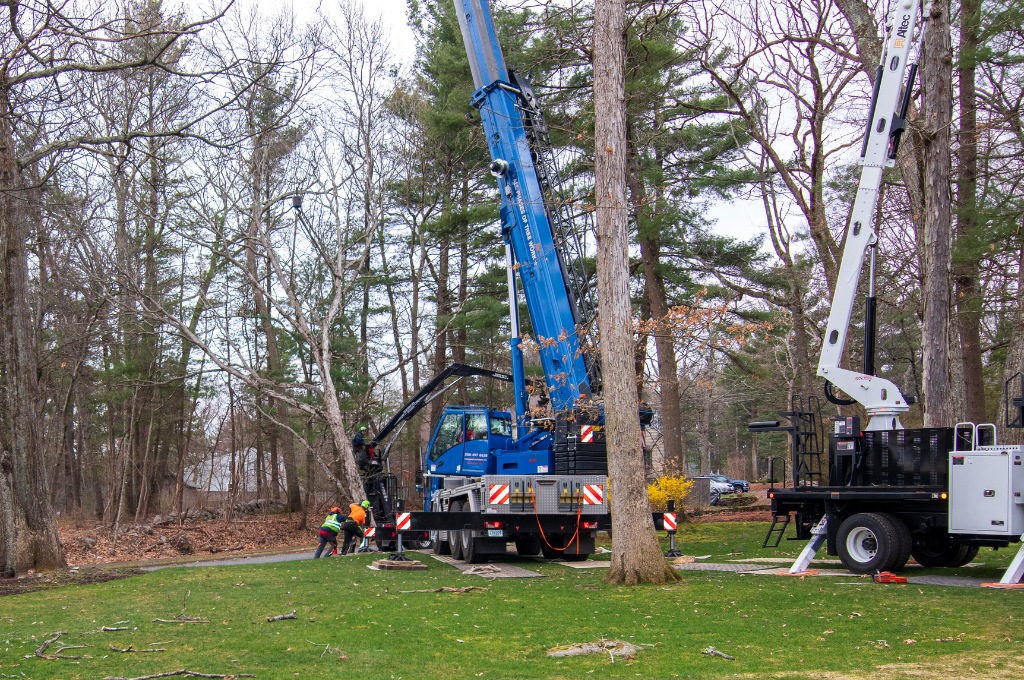
Professional tree removal requires significant equipment staging space – something much easier to coordinate before winter parking restrictions and snow accumulation.
How Winter Conditions Complicate Tree Removal Access
MetroWest Massachusetts presents unique challenges for tree removal that become significantly more difficult once winter weather arrives. Our dense, established neighborhoods with narrow streets and limited parking create logistical puzzles that are manageable in fall but nearly impossible during active winter conditions. This includes:
- Framingham’s Coburnville Neighborhood: Street parking for our cranes becomes problematic during winter parking restrictions because these narrow streets become treacherous during winter storms.
- Weston’s Kendal Common and Spruce Hill Areas: Winding roads provide charm during other seasons, but they become hazardous for heavy equipment when ice conditions develop. These neighborhoods require precise crane positioning that becomes impossible during winter weather.
- Sherborn’s Historic Districts: Scenic roads with stone walls and narrow passages create additional work restrictions during winter. Once snow accumulates, these challenging access points become impassable for tree removal equipment.
Equipment Required for Safe and Efficient Tree Removal
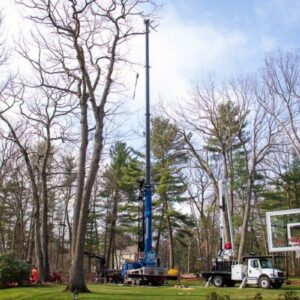
Our tree removal equipment needs to be positioned as close as possible to the tree being removed. This includes our cranes, bucket trucks, wood chippers, and crew vehicles. In MetroWest’s dense neighborhoods, finding space for this equipment takes careful planning.
Winter parking bans in towns like Newton and Wellesley eliminate street staging areas we rely on during other seasons. The narrow lot lines common throughout MetroWest mean that crane work requires precise positioning that becomes much more challenging when winter ground conditions limit where we can safely set up.
How Does Winter Weather Unpredictability Create Scheduling Problems?
Despite forecasters predicting warmer-than-average temperatures for the 2025-2026 winter season, winter weather unpredictability creates significant scheduling problems for tree removal companies.
Weather predictions don’t guarantee storm-free months. The National Weather Service Boston office makes this clear: even warmer winter outlooks don’t prevent significant snowstorms.
Winter storms in MetroWest don’t arrive on schedule. When they do hit, they create immediate emergency situations that push planned tree removals to the back of the line. Properties with storm damage take priority, and non-emergency work gets postponed indefinitely.
Do Municipal Winter Restrictions Affect Tree Removal?
MetroWest municipalities implement winter parking restrictions and road access limitations that directly impact tree removal scheduling. Dover’s private roads and long driveways can become inaccessible for weeks when winter snow removal prioritizes main arteries over secondary streets.
Towns like Sudbury, with their conservation area restrictions, often suspend work permits during the winter months when ground conditions could damage sensitive environmental areas. These seasonal restrictions mean that tree removal work that could be completed easily in late fall becomes impossible until the spring thaw.
What Makes Emergency Tree Removal More Expensive?
Emergency tree removal services cost more than planned removals because they require immediate response during challenging conditions. A tree that could be safely removed in late fall for standard rates often becomes an emergency removal situation after winter weather damage. Emergency tree removal services cost more for several reasons, including:
- Immediate response required, often during challenging conditions
- Disruption of normal scheduling for other customers
- Additional services like property damage cleanup and debris removal from structures
- Coordination with utility companies when power lines are involved
- Specialized confined space removal techniques if falling branches damage surrounding property
PRO TIP: The difference between planned and emergency tree removal costs can be dramatic. A routine removal that we could handle efficiently in late fallmight require emergency response, property damage mitigation, and complex rigging if the same tree fails during a winter storm.
What Are the Hidden Costs of Delaying Tree Removal?
Delaying tree removal creates hidden expenses that many MetroWest homeowners don’t anticipate. Beyond direct cost differences, delaying tree removal creates hidden expenses that many MetroWest homeowners don’t anticipate. Storm-damaged trees often cause secondary damage to roofing, siding, vehicles, and landscaping that wouldn’t occur with proactive care.
Insurance considerations also play a role. While homeowner’s insurance may cover storm damage, the deductibles and potential rate increases from claims can make emergency situations significantly more expensive than planned tree removal.
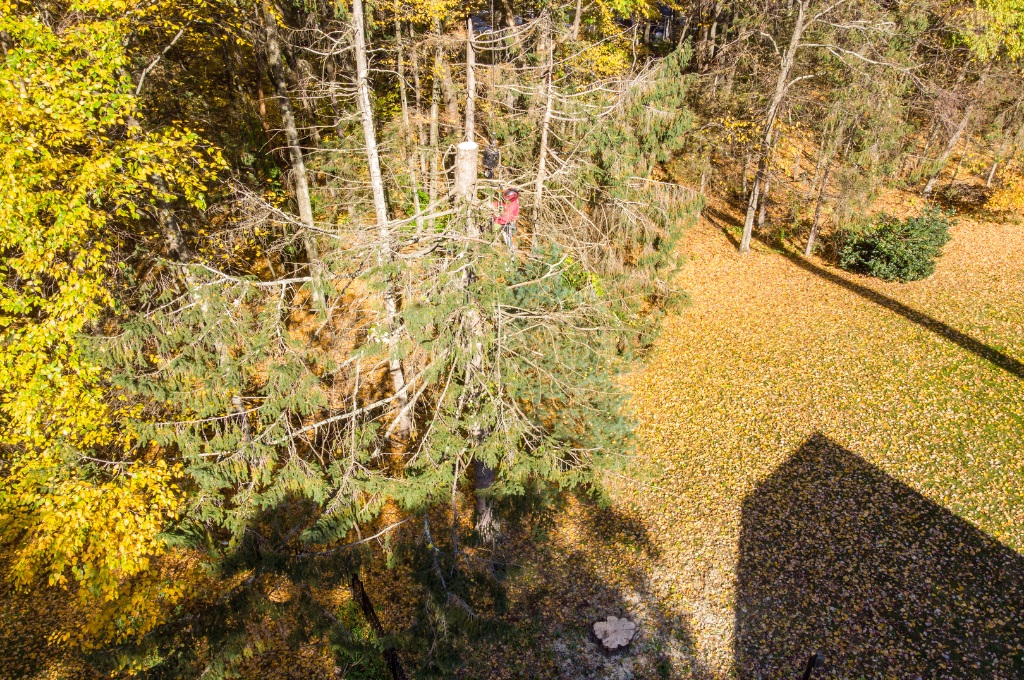
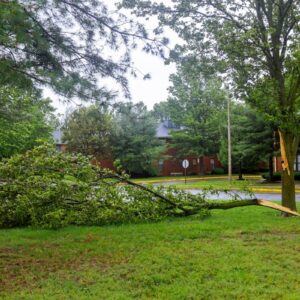
Preemptively removing dying trees (like the evergreen pictured above) can save you money and headaches after a Massachusetts nor’easter.
Frequently Asked Questions
Can American Climbers work in winter weather conditions?
Yes, we work year-round and have extensive experience with winter tree removal in MetroWest. We only pause work during active storms or dangerous conditions, such as ice-covered trees and high winds. Our winter work capabilities include specialized equipment and techniques developed over 25+ years of MetroWest operations.
What happens if a storm delays my scheduled tree removal?
We will reschedule your work as soon as conditions are safe, typically within a few days. Late fall storms are usually brief, allowing us to resume normal operations quickly. This is much different from winter storm delays that can last weeks when emergency work takes priority over scheduled removals.
Is late fall too late to schedule tree removal before winter?
Late fall is actually perfect timing for MetroWest tree removal. The leaves are down, ground conditions are typically stable, and we can complete your project before unpredictable winter weather creates complications. Many of our most efficient removals happen in November and early December.
How do winter access challenges affect tree removal costs?
Winter access problems can significantly increase costs by requiring specialized equipment or extended setup times. Streets blocked by snow, frozen ground limiting equipment access, and longer project timelines all contribute to higher costs. Scheduling tree removal during fall avoids these complications entirely.
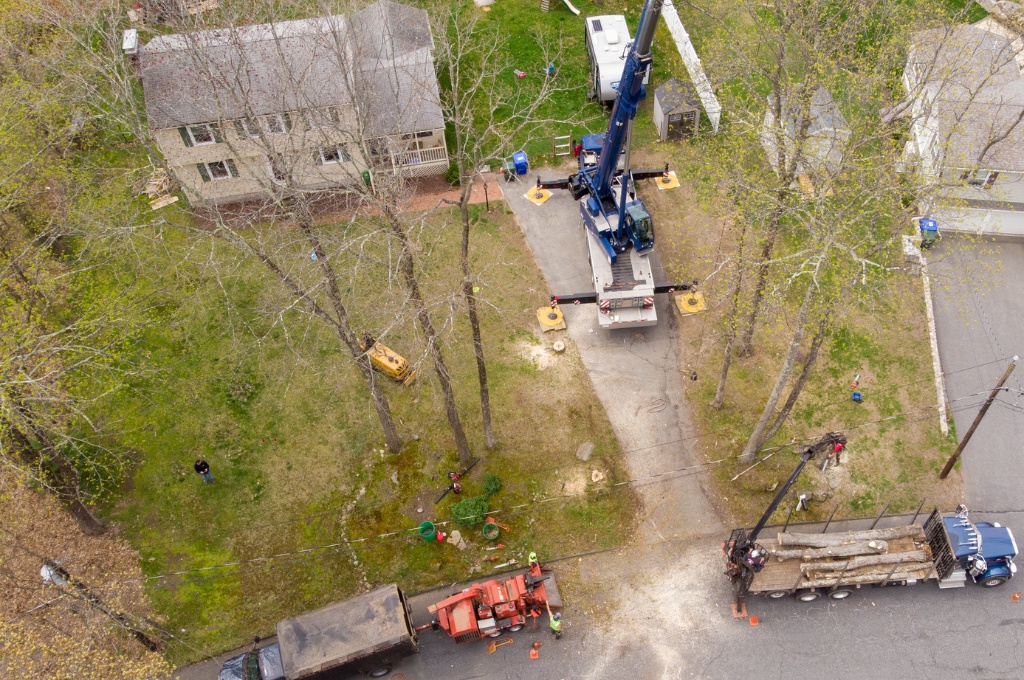
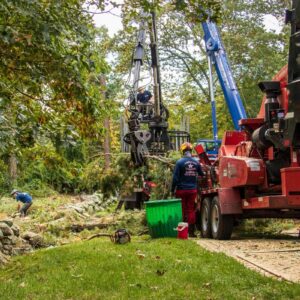
Complex residential tree removal operations require precise equipment positioning – scheduling flexibility is key to safe, efficient work.
Don’t Wait for Winter Weather to Complicate Your Tree Removal, Call American Climbers Today!
American Climbers has the specialized equipment, winter experience, and local MetroWest knowledge to handle your tree removal efficiently before winter weather creates scheduling delays and access problems.
Our state-of-the-art equipment, including cranes and our industry-leading grapple saw, can safely remove even the largest trees from the most challenging MetroWest locations. We’ve been serving the MetroWest area since 1996, and we know exactly how to navigate the unique challenges of each neighborhood.
Call us today at 508-497-8628 to schedule your tree removal before winter weather hits, or request a quote online.
Blog Topics
Recent Posts

What's Happening? Stay Informed!
Stay on top of local events, pest and disease updates, tree and landscape tips, and more. Delivered straight to your inbox each month.

