

Winter storms in the MetroWest can turn your property’s mature trees from beautiful assets into dangerous hazards in just hours. When nor’easters and ice storms strike our region, trees face extreme stress from heavy snow loads, ice accumulation, and powerful winds reaching 80 mph.
The massive storm at the end of 2024 brought trees down and knocked out power throughout the area, showing just how quickly conditions can change. Whether you live in dense neighborhoods or wooded estates, having a comprehensive tree emergency action plan protects your family, property, and neighbors when winter weather turns dangerous.
Key Takeaways
- Pre-storm tree inspection identifies hazardous conditions before they become emergencies.
- Emergency contact protocols help navigate municipal response and utility coordination during outages.
- Immediate safety actions during active storms prevent injuries when trees start failing.
- Post-storm assessment procedures ensure proper damage evaluation without additional risks.
- Professional emergency response becomes essential for safe removal of damaged trees near power lines.
- Long-term recovery planning helps restore property safety and prevent future winter storm damage.
How to Prepare Your Property Before Winter Storms
The best emergency response starts before the storm arrives. Preparation is often the most important step to protect your property and family during a storm.
What to Look for During a Pre-Storm Tree Inspection
Walk your property 48-72 hours before predicted severe weather and look for these warning signs:
- Dead or dying branches that could snap under snow load
- Leaning trees with visible root exposure or soil heaving
- Cracked or split trunks that indicate structural weakness
- Overhead hazards near power lines, roofs, or driveways
- Dense tree crowns that catch excessive snow and ice
- Codominant stems that create weak attachment points
Take photos of any concerning areas for insurance documentation and potential professional consultation. Focus especially on trees that could impact your home, vehicles, or your neighbor’s property if they fail.
“We see too many preventable emergencies each winter season. A quick property walk-through before storms can identify the trees that pose real risks to families and homes. The time to address hazardous trees is before they become emergency removals.” – Rich Yurewicz, Owner of American Climbers
What to Do During Active Winter Storms
When winter storms actively threaten the area, your immediate response focuses on family safety and damage limitation. Massachusetts emergency protocols emphasize staying informed and avoiding unnecessary risks.
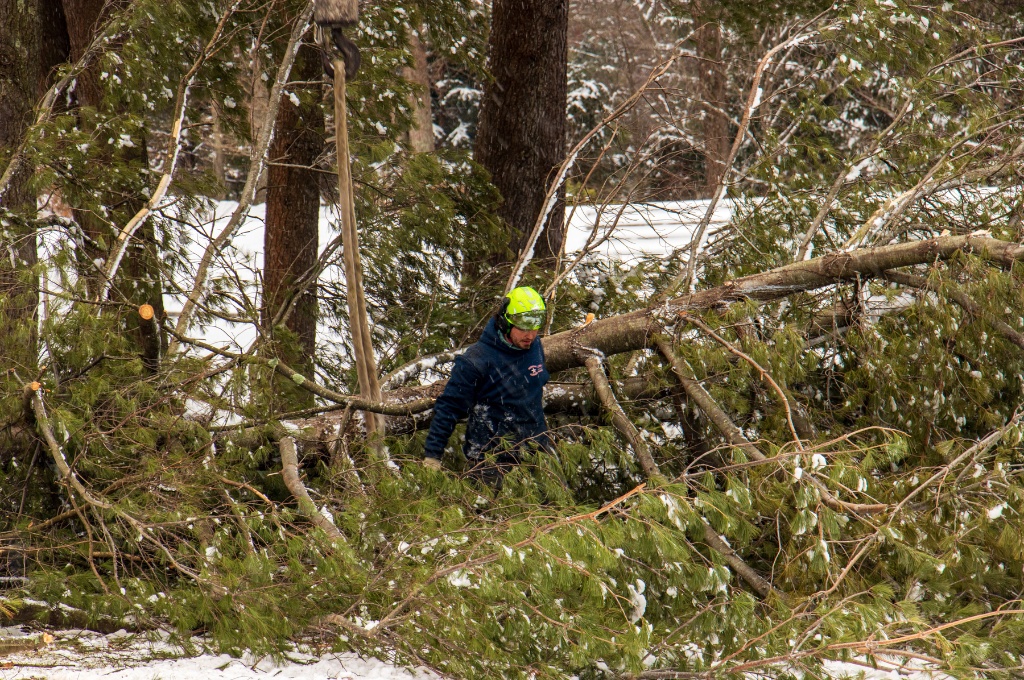
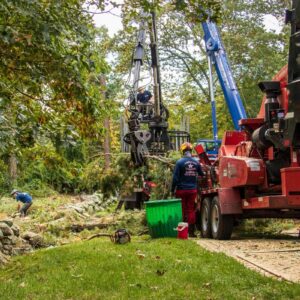
Professional emergency tree cleanup requires specialized safety equipment and expertise during dangerous winter conditions.
How to Monitor Storm Conditions in Real-Time
Stay connected to official weather information:
- National Weather Service Boston/Norton Office for official warnings and forecasts
- Massachusetts Alerts mobile app for emergency notifications
- NOAA Weather Radio for continuous updates during power outages
- Local emergency management social media for community updates
PRO TIP: Never leave your home during active tree emergencies. Storm-damaged trees are precarious and unpredictable. Branches under tension can snap suddenly, and partially fallen trees can shift without warning. Stay indoors and call professionals immediately for any tree threatening structures or safety.
What to Do If Trees Threaten Your Home
When trees pose immediate threats during active storms:
- Evacuate threatened areas of your home immediately
- Move to the safest room away from large trees and windows
- Never attempt tree work yourself during storm conditions
- Document damage with photos if safely possible from inside
- Call 911 if life safety is immediately threatened
How to Handle Power Line and Utility Emergencies
Trees contacting power lines create life-threatening situations requiring immediate professional response:
- Call Eversource immediately: 1-800-592-2000
- Report the exact location and nature of the emergency
- Keep everyone at least 35 feet away from downed lines
- Never attempt to remove tree branches from power lines
- Assume all downed lines are energized and dangerous
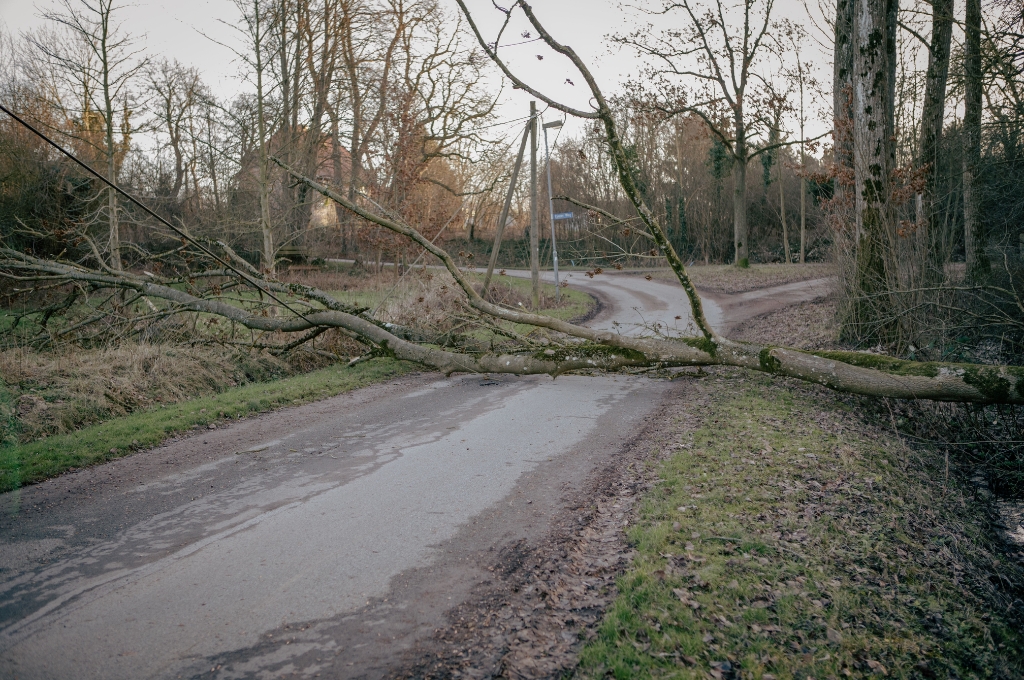
Trees blocking roads create immediate emergency situations requiring professional coordination with utilities and municipal services.
How to Assess and Respond After Winter Storms
Once the storm has passed and it’s safe to go outside, do a quick visual check to determine whether you’re dealing with a true tree emergency or a situation that can wait for standard scheduling. This helps you request the right level of service and reduces delays during high-demand storm periods.
When It Is a Tree Emergency
- Tree service companies prioritize calls when:
- A tree or large limb is on a house, garage, or vehicle
- A fallen tree is blocking a driveway, preventing you from leaving
- A tree is leaning suddenly or shows fresh root lifting
- Large branches are cracked, hanging, or unstable and could fall
- A tree has fallen across a private road or access point
- These situations require urgent response because they pose immediate safety or property risks.
When It’s Not an Emergency
These issues can wait for normal business hours:
- Branches already on the ground
- Minor limb damage not threatening structures
- Cosmetic cleanup or debris removal
- Trees that are leaning but haven’t changed position over time
After major storms, demand for emergency tree work spikes across MetroWest. Crews always respond first to life-threatening hazards, then to significant property damage, and finally to non-urgent cleanup. Knowing this priority order helps set realistic expectations – and keeps everyone safer.
How to Work with Insurance and Plan Recovery
Storm damage is stressful – but knowing what to do after the immediate emergency makes the recovery process much smoother. Start by documenting everything:
- Take photos of the damage before any work begins
- Get written assessments from a professional
- Save receipts for emergency services
Your insurer will ask for all of this.
Contact your insurance agent as soon as you’re safe to do so. Ask specifically what’s covered, because most policies pay for tree removal off a structure, but not general yard cleanup. And before anyone touches your property, always confirm the company carries proper tree service insurance coverage – it’s the only way to protect yourself from additional liability during hazardous work.
Once the emergency phase is handled, focus on long-term recovery. Trees that survive a winter storm often need corrective, structural pruning to reduce future risk. Regular professional pruning, annual risk assessments, and the strategic removal of hazardous trees near homes and utilities all help prevent repeat emergencies, especially in MetroWest neighborhoods with mature, storm-prone trees.
Frequently Asked Questions About Winter Tree Emergencies
Should I try to remove snow from tree branches myself?
No, never attempt to remove snow or ice from tree branches. The weight and tension in loaded branches make them extremely unpredictable and dangerous. Professional equipment and experience are essential for safe removal without causing additional damage.
How quickly can emergency tree services respond during major storms?
Emergency response times vary based on storm severity and demand. Life-threatening situations receive immediate attention, while non-emergency cleanup may take several days to schedule during widespread storm damage. Calling early with detailed information helps prioritize your situation appropriately.
Will my homeowner’s insurance cover emergency tree removal?
Most policies cover emergency tree removal when trees damage structures or block essential access, like driveways. Coverage for preventive removal or general cleanup varies significantly by policy. Contact your insurance agent before storm season to understand your specific coverage and requirements.
What should I do if a tree falls on my neighbor’s property?
Massachusetts fallen tree laws state that if a tree falls due to an “Act of God,” removal is the responsibility of the property owner where the tree lies. Use our handy guide to determine who is responsible for removing a tree after a storm.
How can I tell if a storm-damaged tree can be saved?
Professional assessment is essential for storm-damaged trees. Factors like percentage of crown loss, trunk damage, root system integrity, and species characteristics all affect survivability. Many trees appearing severely damaged can recover with proper care, while others may pose ongoing safety risks.
Are certain Massachusetts trees more dangerous during ice storms?
Yes, specific tree species are more prone to storm failure, including Bradford pears, silver maples, and trees with codominant stems. Eastern white pines, while generally stable, frequently lose branches during ice loading events that can cause significant property damage.
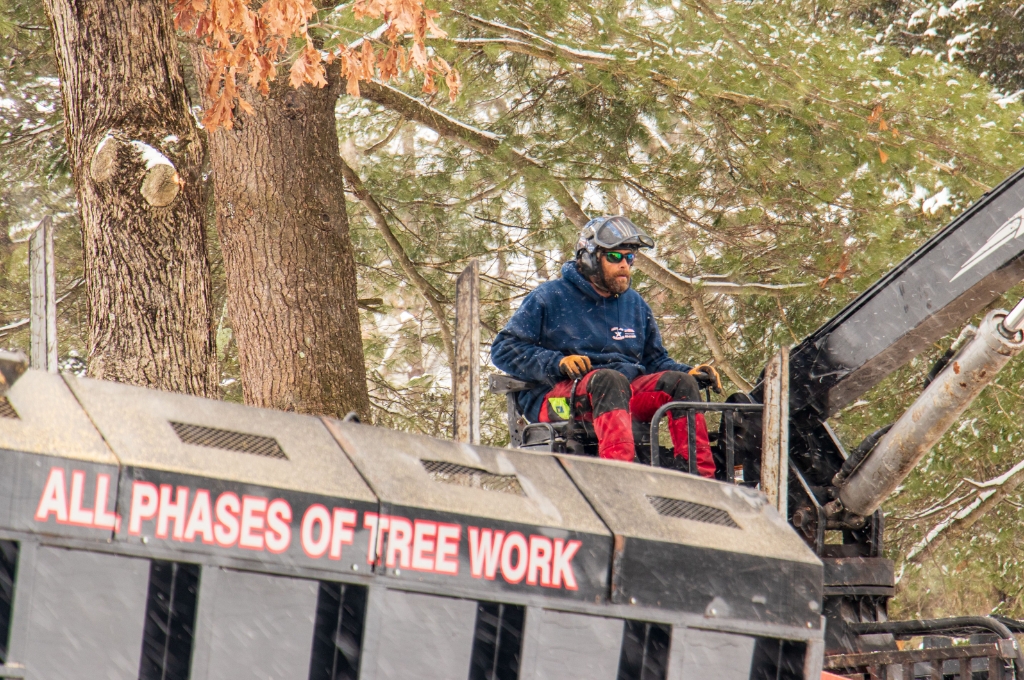
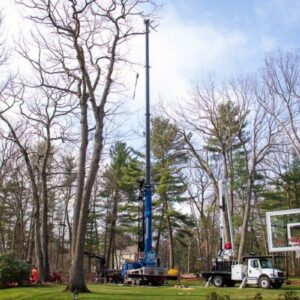
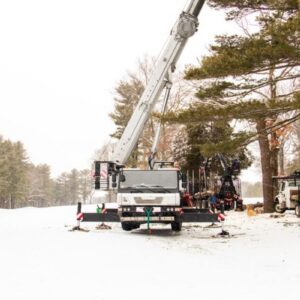
American Climbers’ specialized equipment enables safe, efficient tree work even during challenging winter emergency conditions.
Get Fast, Professional Help When Winter Storms Hit from American Climbers
When winter storms threaten your property, don’t risk your family’s safety with inexperienced crews or inadequate equipment. American Climbers has been handling the region’s most challenging emergency tree situations since 1996, with specialized cranes, bucket trucks, and the expertise to safely remove dangerous trees.
Our emergency response team operates during storm events, using the same professional approach that’s earned us the Best of MetroWest recognition year after year. From rapid storm cleanup to complex crane-assisted removals that other companies can’t handle, we understand the unique challenges each community faces during winter emergencies.
Don’t wait until storm-damaged trees threaten your home. Call us at 508-497-8628 for emergency assistance, or request a quote online for help with your storm-damaged trees.
Blog Topics
Recent Posts

What's Happening? Stay Informed!
Stay on top of local events, pest and disease updates, tree and landscape tips, and more. Delivered straight to your inbox each month.

