It’s late spring in MetroWest, which means spring cleanup projects are in full swing. The lawn is green again, overgrown branches are suddenly noticeable, and a lot of homeowners are finally tackling tree work they’ve been putting off since winter. But when you finally call around and the quotes start coming in, the numbers—and recommendations—can be wildly different.
When multiple companies are giving completely different opinions on the same tree, it becomes less about finding the lowest price and more about figuring out who you can actually trust. There are a few clear signs that separate a reputable tree service company from one that’s simply trying to win the job as quickly and cheaply as possible.
Key Takeaways
- Whether you need light pruning or a full removal, the same things matter when hiring a tree company: proper insurance, qualified crews, clear communication, and a detailed written estimate.
- Tree service quotes for the same job can vary widely in MetroWest, and the cheapest quote is often missing insurance, scope, or both.
- Verifiable credentials matter more than marketing—Massachusetts hoisting licenses, tree-work-specific insurance, and a written itemized estimate are all things you can check.
- Door-to-door solicitation after a storm, demands for upfront payment, and verbal-only quotes are the clearest red flags to walk away from.

Verify a tree service’s general liability and workers compensation insurance directly with their insurer before any work begins—not from a contractor-supplied photocopy.
How Do I Choose a Tree Service Company?
To choose a tree service company, you must:
- Verify their insurance and licensing.
- Confirm they have the right equipment for your job.
- Get a written itemized estimate.
- Watch for red flags like door-to-door solicitation or demands for upfront payment.
Whether you need a lone branch pruned or a large tree removed, the same checklist applies. Comparing quotes doesn’t mean you’re choosing between prices; you’re choosing between risk profiles. The lowest and highest bidders aren’t selling the same thing, even if the work orders look similar.
Why Are Tree Service Quotes So Different for the Same Job?
Tree service quotes for the same job can vary greatly because of differences in insurance coverage, equipment, crew qualifications, scope inclusions, and how each company plans the job.
Five main factors that influence the price include:
- Insurance Overhead: Proper tree-work insurance is expensive, and reputable companies price it in. Companies that skip it quote lower because they’re not paying for the protection they claim.
- Equipment Access: A company that owns a crane handles certain jobs faster and more safely than one that rents or works around the limitation. Without the right equipment, a lower price often comes with a riskier plan.
- Crew Qualifications: A trained tree care crew works faster, cuts cleaner, and is less likely to damage your property. A “tree guy with a chainsaw” works cheaper—and so is the result.
- Scope Inclusions: Debris cleanup, hauling, and stump grinding (as an add-on to removal) aren’t always built in. The cheapest estimate often leaves one of those out.
- Scope Interpretation: Two companies can look at the same tree and plan different jobs—one rigs it down in pieces, another takes it down with a crane in two lifts. Different plans mean different prices and different risks.
Understanding the cost of poor tree care when you hire the wrong company can help you before choosing based on price alone.
What Insurance, Licenses, and Credentials Should a Massachusetts Tree Service Have?
A Massachusetts tree service should always:
- Carry general liability insurance and workers compensation written specifically for tree work.
- Hold the appropriate Massachusetts hoisting licenses for the equipment they operate.
- Have crews trained in industry safety standards.
Insurance Coverage Specifically for Tree Work
The two policies that matter are general liability and workers compensation, both written to cover tree work. Typically, landscaper insurance only covers work on the ground and up to around eight to ten feet above it. Anything higher and you can be responsible if a worker is injured or property is damaged.
Most landscaping businesses carry general liability policies with a $1 million per-occurrence limit and a $2 million aggregate limit. Ask the company to have their insurance provider send the Certificate of Insurance (COI) directly to you, not through the contractor. For a complete view, verify their insurance coverage before you sign anything.
PRO TIP: Always ask for the COI to come straight from the insurer, not the contractor. There’s usually no charge, and it’s the only reliable way to confirm the policy is current and covers tree work.
Massachusetts Hoisting Licenses
Under 520 CMR 6.00, Massachusetts requires a Hoisting Engineer License for any equipment that:
- Lifts over ten feet
- Lifts more than 500 pounds
- Has more than a quarter-yard bucket capacity
For crane-assisted tree removal, the relevant class is 1B, which covers telescoping boom cranes with wire ropes. Licenses renew every two years.
This credential isn’t well known. If a company is bidding on a job that requires hoisting equipment, you have the right to ask whether they hold the appropriate class.
Crew Qualifications and Industry Standing
When it comes to an operation’s crew, ask about:
- Training
- Years of local experience
- Whether the company belongs to industry organizations like the Tree Care Industry Association (TCIA).
Local recognition (like MetroWest’s Quest for the Best), longstanding business presence in your town, and references are all signals of community standing. None are proof on their own, but their absence is noteworthy.
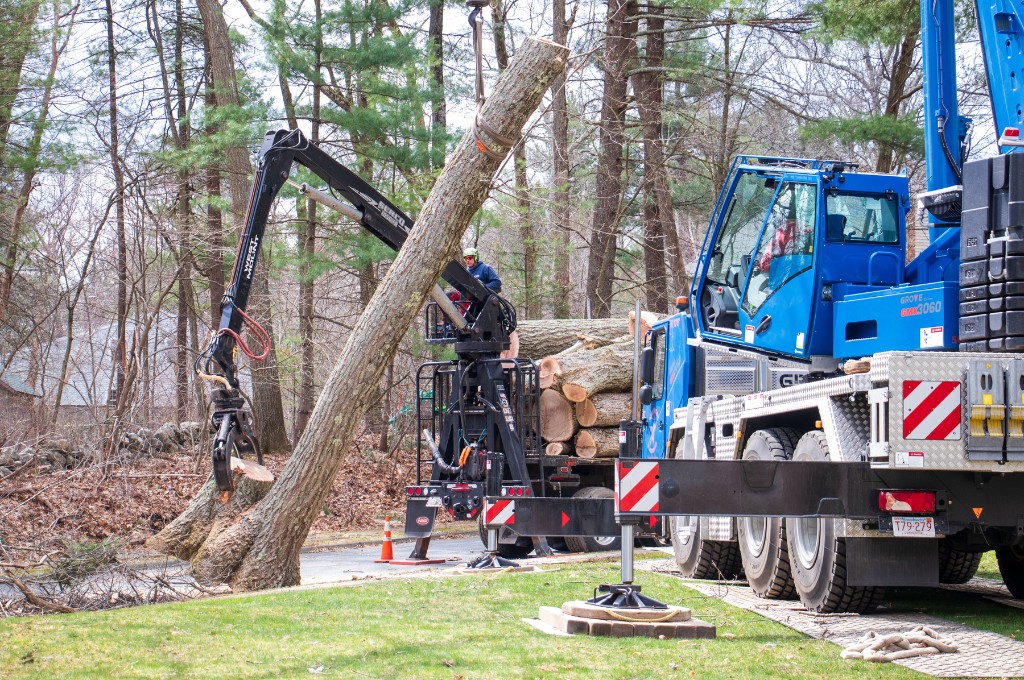
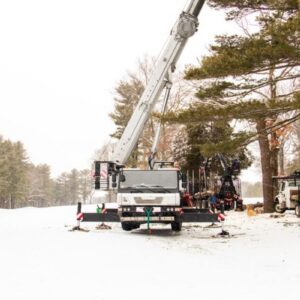
Lawn protection—mats, pads, and plywood under heavy equipment — is one of the on-site practices that tells you a tree service plans the whole job, not just the cutting.
What Are Signs of a Professional Tree Service Company?
Most homeowners don’t hire tree companies often enough to immediately know what separates a professional crew from a risky one. A polished website or a low quote doesn’t necessarily tell you much about the quality of the work. The better indicators are usually the smaller details: how the company explains the job, how prepared the crew is on-site, and whether safety and professionalism are obvious from the moment they arrive.
They Clearly Explain the Scope of Work
A professional tree company should be able to clearly explain what work is being performed, why it’s being recommended, and what’s included in the price. That includes things like whether cleanup and debris hauling are included, whether stump grinding is separate, how close cuts will be made to the ground, and whether nearby landscaping or hardscaping needs protection during the job.
You should also expect an explanation if one company recommends pruning while another recommends removal. A reputable arborist should be able to walk you through the tree’s condition, risk level, and realistic long-term outlook instead of jumping straight to the most expensive option.
The Crew Arrives with the Right Equipment for the Job
Professional tree work usually requires more than chainsaws and a pickup truck. Depending on the tree and location, reputable companies may use bucket trucks, cranes, rigging systems, wood chippers, stump grinders, or specialized climbing gear to safely control the work.
Just as important, the equipment should match the situation. Large removals near homes, driveways, fences, or power lines typically require a more controlled approach than an open backyard tree with plenty of space to drop material. Companies that invest in proper equipment are often investing in efficiency, safety, and reducing the chances of property damage.
Safety Practices Are Visible Throughout the Job
Safety shouldn’t feel improvised on a tree job. Professional crews typically establish clear work zones, use cones or barriers when needed, communicate constantly during cuts, and wear protective gear like hard hats, eye protection, hearing protection, chainsaw chaps, and climbing harnesses.
You may also notice steps taken to protect your property, like laying plywood over soft ground, carefully rigging limbs instead of free-dropping them, or assigning one crew member specifically to watch the landing zone. These details may not seem exciting, but they’re often what separates a well-run tree company from a crew rushing to finish as many jobs as possible in a day.
What Are the Red Flags of an Unreliable Tree Service?
The most obvious red flags of an unreliable tree service include:
- Door-to-door solicitation, especially on the days after a storm.
- Demands for full payment upfront or unusually large deposits before work begins.
- Verbal-only quotes with no written, itemized scope.
- Refusal to provide a COI directly from the insurance company.
- Use of climbing spikes on live trees being pruned (acceptable for removals only).
- Recommendations to “top” your tree, or other discredited practices like lion-tailing.
- The price is a lot less than the other quotes you’ve gotten.
- No physical business address or no traceable local presence.
- High-pressure sales tactics, or “today only” discounts.
Frequently Asked Questions About Choosing a Tree Service
How many tree service quotes should I get?
Three written estimates is the standard recommendation. Three gives you enough range to spot outliers, both the suspiciously low and unusually high, and lets you compare what’s included in each scope.
What questions should I ask a tree service before hiring?
You should ask:
- For proof of general liability and workers compensation insurance that specifically covers tree work.
- Whether they hold a Massachusetts hoisting license if heavy equipment will be used.
- Whether debris cleanup is included.
- For a written, itemized estimate.
What’s the difference between a tree service and a landscaper offering tree work?
The difference between a tree service and a landscaper offering tree work usually comes down to insurance. Landscaper policies usually cover work on the ground and up to around eight to ten feet above it, so anything more than that may not be covered. A tree service carries tree-work-specific insurance written for the work being done.
Is the cheapest tree service quote the best deal?
Usually not. When one quote comes in dramatically lower than the others, there’s often a reason behind it. The company may not carry proper insurance, may be leaving out cleanup or stump grinding, or may be planning to complete the job with less equipment, fewer crew members, or less protection for your property.
Tree work is one of the most hazardous trades in the country, and reputable companies price jobs around trained labor, safety procedures, insurance coverage, and specialized equipment. A cheaper quote can end up being far more expensive if property damage occurs, the job is left incomplete, or liability falls back on the homeowner.
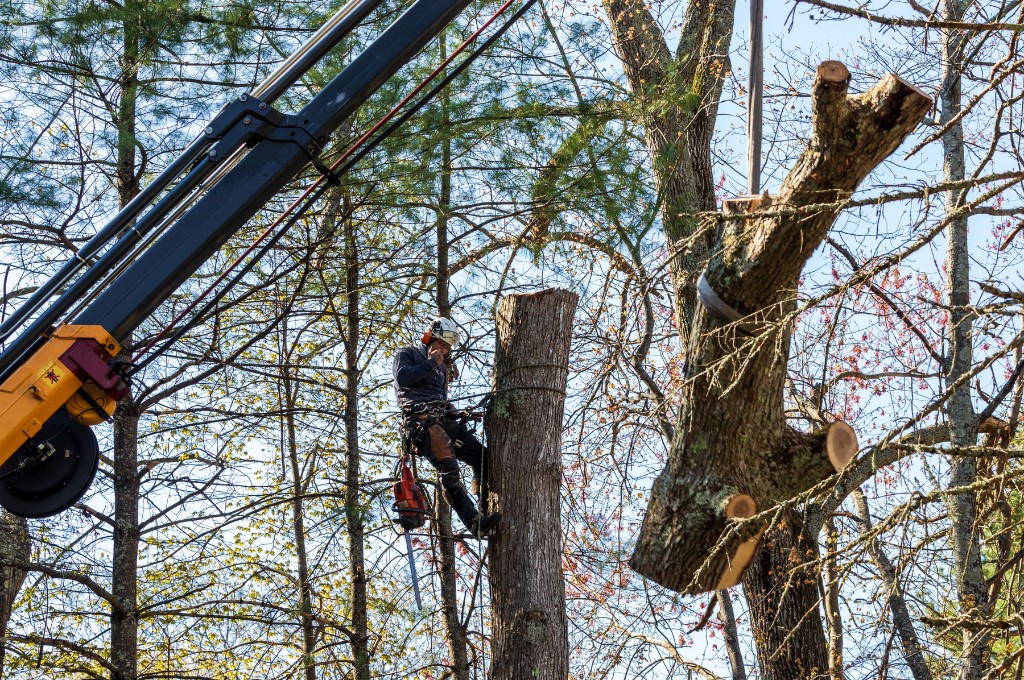
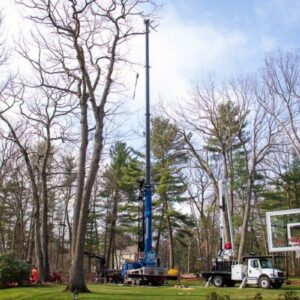
Crane-assisted removal lets crews lower heavy sections in controlled lifts rather than dropping them—the kind of plan that separates a fair price from a risky one.
For Professional Tree Service You Can Trust, Call American Climbers
If you’re sitting with a few quotes in front of you, make sure you go through the hiring criteria. Verify insurance directly from the insurer, confirm a hoisting license if equipment is involved, get the equipment and scope laid out in writing, and ensure there is no door-to-door solicitation or demand for upfront payments.
When you’re ready to get a written estimate from an insured, licensed MetroWest tree service, call American Climbers at 508-497-8628 or request a quote online.
Blog Topics
Recent Posts
What's Happening? Stay Informed!
Stay on top of local events, pest and disease updates, tree and landscape tips, and more. Delivered straight to your inbox each month.