
Most homeowners assume crane tree removal is the most expensive option. With such large equipment, specialized crew, and a lot happening all at once, it looks like it should be. But in many cases, the crane is what actually keeps the cost down. It can turn a multi-day project into a few hours, reduce labor, and limit the risk of damage to your property.
That doesn’t mean every tree needs a crane. But if yours does, it’s worth understanding how the process works, what actually drives the cost, and when crane-assisted tree removal makes the most sense.
Key Takeaways
- Crane tree removal uses a truck-mounted crane to lift sections of a tree out rather than dropping them, making it the safest option for trees near structures, power lines, or in tight spaces.
- For complex jobs, crane removal often carries similar costs to standard tree removal, as it reduces labor hours, crew size, and time on your property.
- Not every tree company owns cranes or has trained crane operators; this is one of the most important things to check before hiring.
- The cost of a crane removal job depends on the tree itself, its size, species, and condition, along with how accessible it is and what equipment the job requires.
- In Massachusetts, crane operators must be licensed — make sure the company you hire meets that requirement.
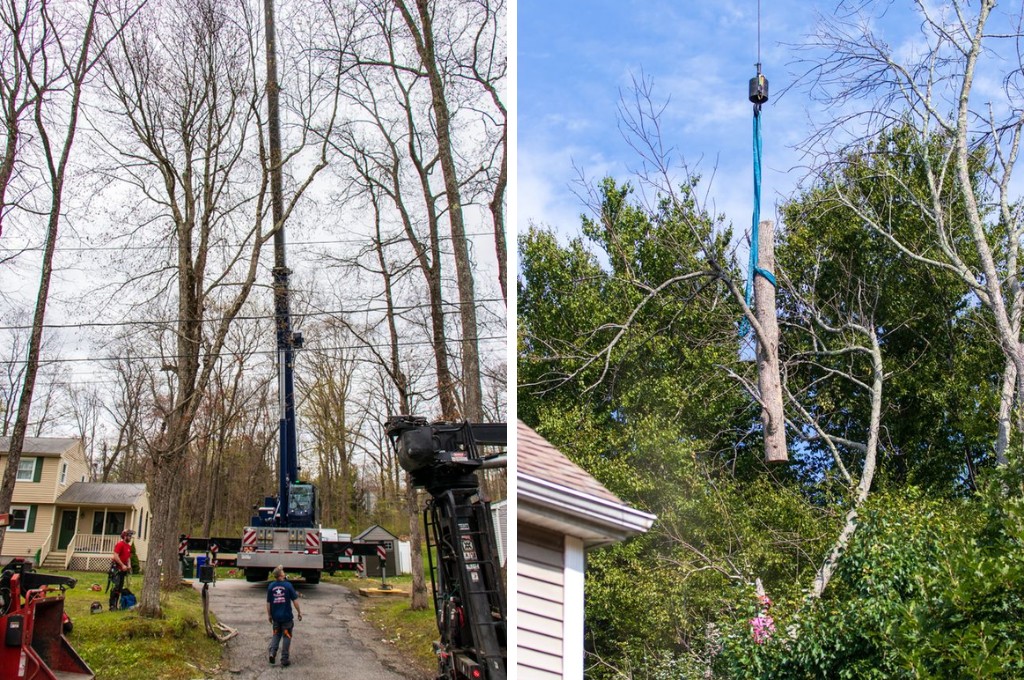
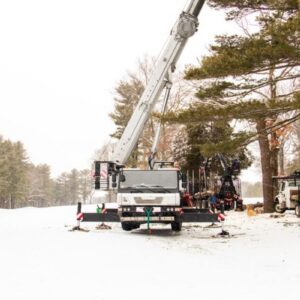
A crane allows the crew to lift large trunk sections over rooftops and other structures instead of lowering them piece by piece.
What Is Crane Tree Removal?
Crane tree removal is a method of taking down a tree by lifting cut sections up and away, rather than dropping or lowering them piece by piece. A climber works in the tree, cutting sections free while the crane lifts each one clear of nearby structures, power lines, and landscaping. A ground crew then processes the debris as it comes down.
The crane itself is truck-mounted, allowing it to be driven to your property and set up in a driveway or along the street. Most cranes used for tree work can lift several tons at a time, making it possible to remove large sections of the tree in a single pick.
This approach isn’t just faster — it’s also safer. By lifting and placing each piece with precision, the crew has far more control over where material goes, reducing the risk of damage to your property.
When Do You Need a Crane for Tree Removal?
You need a crane when a tree can’t be safely taken down using climbing alone — typically because of where the tree is, what condition it’s in, or how big it is. Some of the most common scenarios where we suggest tree removal with a crane include when a tree is:
- Close to Your House, Garage, Pool, or Other Structure: There’s no safe drop zone, so sections need to be lifted away rather than lowered past your roof, fence, or deck.
- Near Power Lines: The crane lifts the cut piece up and away from the obstacle, then rotates (swings) it to a safe open area before lowering it.
- Dead, Diseased, or Storm-Damaged: Compromised wood is unpredictable. Dead ash trees killed by emerald ash borer can snap without warning, making them unsafe to climb. A crane keeps the crew out of danger.
- Too Large for Standard Removal: Height, trunk diameter, and canopy spread can all exceed what a climbing crew can safely manage on their own.
- In a Confined or Hard-to-Reach Area: The tree is in a backyard or sandwiched between structures with no clear equipment path. Trees in confined spaces are common in tight neighborhoods, like Framingham.
- One of Several Trees Being Removed: Crane mobilization is a major cost component, so bundling several removals into one crane day makes financial sense.
PRO TIP: There’s no one-size-fits-all approach for when a tree service uses a crane. An expert will assess your property and tree during the initial quote process to determine the most efficient way to remove it.
How Does Crane Tree Removal Work?
Crane tree removal is a coordinated operation between a crane operator, a climber, and a ground crew. Each step builds on the last, and the whole process moves faster than most homeowners expect.
Setup and Stabilization
The crane arrives on a truck and is positioned as close to the tree as possible — usually in the driveway or on the street. We’ll discuss with you where we set up so you can prepare the area for the tree removal process. The setup phase can be one of the longest parts, since we need to get the crane perfectly stabilized for safety.
While the crane is being set up, the ground crew prepares a staging area where cut sections will be processed.
Cutting and Lifting
Once the crane is stabilized, a climber ascends the tree and positions themselves near the top. They attach rigging to a section of the trunk or a major limb, then cut it free with a chainsaw. The crane lifts that section and swings it to the drop zone.
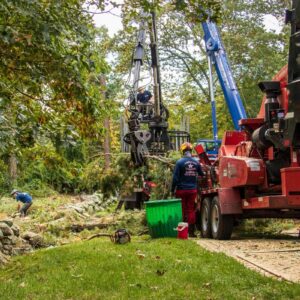
The ground crew takes it from there, putting the limb through the chipper and placing logs on the truck. The process repeats from the top down until the tree is reduced to a stump. The climber and crane operator stay in constant communication to avoid accidents and keep the process moving. It’s a choreographed operation, and when you watch a good crew do it, it looks almost effortless.
PRO TIP: Despite the massive equipment and large-scale operation, our tree removal team takes great care to avoid any damage to your property during tree removal. Professional teams receive ample training on protecting lawns, landscaping, and driveways.
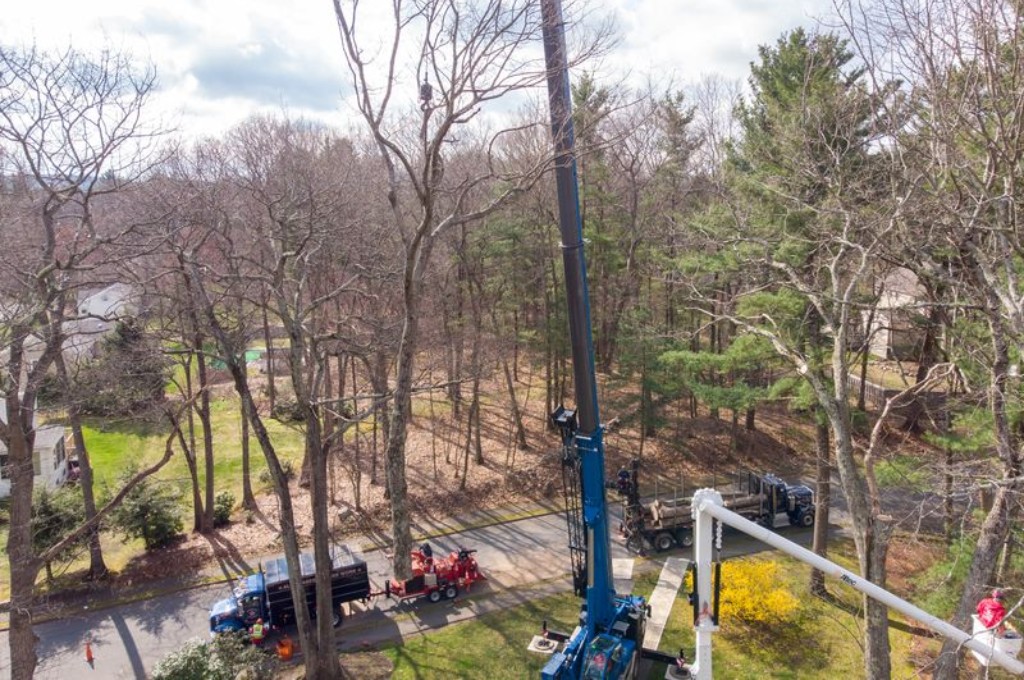
Even with a crane, chipper, and log truck on site, crane tree removal is often comparable in cost to traditional methods because the equipment dramatically reduces labor time.
How Much Does Crane Tree Removal Cost?
Crane tree removal cost depends on several factors specific to your tree and your property. But understanding what drives the number helps you evaluate quotes and know whether what you’re being charged makes sense.
Factors That Affect Your Quote
- Tree Size: Height, trunk diameter, canopy spread, and total wood volume all affect how long the job takes and what equipment is needed.
- Tree Species: Dense hardwoods, like oak and maple, are significantly heavier than softwoods, like pine, which means more crane capacity and more time per lift.
- Tree Condition: Dead, diseased, or storm-damaged trees require extra safety measures because the wood is less predictable.
- Location and Access: Trees close to houses, power lines, or other structures require more precise crane positioning. Tight driveways, sloped terrain, or limited street access can add complexity to the setup and affect the overall cost.
- Crew Size: The number of team members we need will fluctuate depending on other factors. A larger crew will increase the cost.
- Number of Trees: Crane mobilization (getting the crane to your property and setting it up) is one of the biggest cost components. Once the crane is on-site, each additional tree is proportionally cheaper.
- Time of Year: Scheduling during less busy months (typically late fall through winter) may offer some flexibility on pricing.
Why Crane Removal Isn’t as Expensive as You Think
Most homeowners assume a crane automatically makes the job more expensive. That’s not always the case. When a tree genuinely needs a crane, trying to do the job without one usually means more labor hours, a bigger crew, more passes to lower sections safely, and a higher risk of property damage along the way.
Tree work is consistently one of the most hazardous occupations in the country, and the risk goes up when crews are working without the right equipment for the situation.
A crane can compress what might otherwise be a whole-day job into a few hours. That means fewer labor hours, a smaller crew on-site, and less time working around your house and landscaping. Those efficiencies often make a crane removal job comparable in cost to tree removal using traditional methods.
What Should You Look for in a Crane Tree Removal Service?
Look for a company that owns its cranes, employs licensed operators, carries crane-specific insurance, and has deep experience doing this work in residential neighborhoods. Not all tree service companies are equipped to do crane work, and the difference between one that is and one that isn’t matters more than you might think.
Crane Ownership
Does the company own its cranes, or do they rent them per job? A company that owns cranes has operators who train specifically for tree work and have extensive experience using a crane for tree removal. Ownership also means faster scheduling, since there’s no waiting for a rental, and lower per-job costs that get passed on to you.
Licensing
In Massachusetts, crane operators are required to hold a hoisting engineer license issued by the Office of Public Safety and Inspections (OPSI). This license requires passing an exam, and operators must renew the license every two years. Ask any company you’re considering whether its operators are licensed.
Insurance
Standard general liability policies don’t always cover crane operations — some exclude crane work unless it’s specifically endorsed on the policy. If something goes wrong on a job and the company’s insurer denies the claim because crane work wasn’t covered, recovering the cost of the damage gets a lot harder. Always ask to see a company’s certificate of insurance before working with them to ensure they have proper coverage.
Training and Experience
Crane-assisted tree removal is specialized work. The crane operator and climber need to be in sync on every cut and every lift; that kind of coordination comes from doing it regularly, not once in a while. Ask how many crane removals the company does per year, how long they’ve been doing this kind of work, and what kind of training they give their team.
Frequently Asked Questions About Crane Tree Removal
How long does crane tree removal take?
Most single-tree crane removals take a few hours once setup is complete, depending on where the tree is and how easy it is for us to set the crane up. The setup itself, positioning the crane and deploying stabilizers, can take just as much time as removing the tree, due to the importance of keeping it stable. Jobs involving multiple trees or very large specimens may take most of a day.
Do I need a permit for crane tree removal?
It depends on your town. Some MetroWest municipalities require tree removal permits, and if the crane needs to be positioned on a public street, a right-of-way permit may also be needed. Your tree service should discuss any permit needs with you when performing the initial inspection.
Is crane tree removal covered by homeowners’ insurance?
It depends on the situation. If a tree has fallen on a covered structure, like your house or garage, many homeowners’ policies cover the removal costs, including crane costs, as part of the claim. Elective removal of healthy standing trees is typically not covered. Check with your insurer before work begins.
What size tree requires a crane?
There’s no hard size cutoff. The decision depends on the tree’s size combined with its location, condition, and access. A 40-foot tree in an open yard might not need a crane, while a 30-foot tree wedged between a house and a fence almost certainly does.
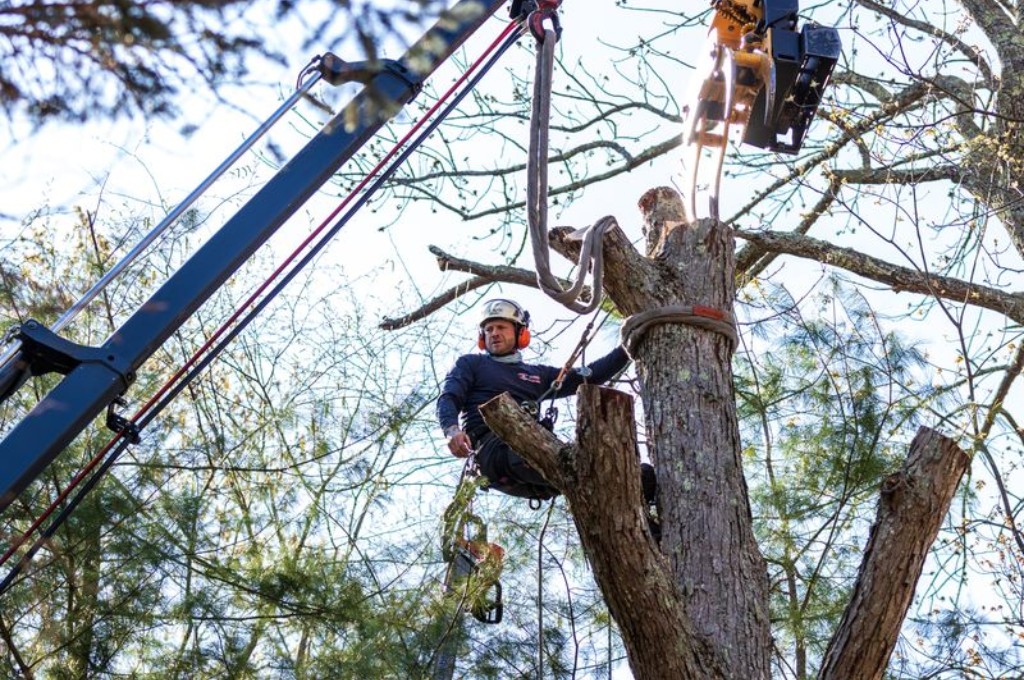
A climber and crane operator work in sync to safely cut and lift each section of the tree.
Get a Crane Tree Removal Estimate from American Climbers Today
Crane tree removal isn’t as over-the-top as it sounds. In the right situation, it’s actually the safest and most efficient way to get a tree down — especially when space is tight or the tree is too large to handle any other way.
What matters most is having a crew that knows what they’re doing. A good crane job is all about planning, communication, and putting each piece exactly where it needs to go without damaging anything around it.
The American Climbers team has extensive experience using a crane to remove trees throughout the MetroWest. Call us today at 508-497-8628 or request a quote online for crane tree removal.
Blog Topics
Recent Posts


What's Happening? Stay Informed!
Stay on top of local events, pest and disease updates, tree and landscape tips, and more. Delivered straight to your inbox each month.