You’ve invested in your MetroWest landscape. Whether it’s mature gardens in Weston, new hardscaping in Natick, or pristine lawns in Wellesley, your property represents years of care and thousands of dollars. Now you need a large tree removed, and your arborist recommends crane tree removal. Your first thought? “Will that huge crane damage my property?”
The good news is that professional tree services use specific protection methods to safeguard your property. When done correctly, crane-assisted tree removal can actually cause less damage than traditional removal methods.
Key Takeaways
- Outrigger pads distribute crane weight across larger surface areas, preventing concentrated pressure that damages lawns and driveways in communities like Dover and Wayland.
- Professional ground protection systems safeguard expensive landscaping investments common in MetroWest’s high-value properties.
- Comprehensive insurance coverage protects homeowners from financial liability if unexpected damage occurs during crane operations.
- Experienced local crews understand the unique challenges of working around MetroWest’s established gardens, stone walls, and mature landscapes.
- Clear damage protocols ensure rapid response and proper restoration if any property damage occurs.
- Enhanced protection methods go beyond basic industry standards to preserve valuable landscape investments.
Why MetroWest Homeowners Prefer Crane-Assisted Tree Removal
Despite initial concerns about property damage, many homeowners in Wellesley, Wayland, Weston, Dover, and Natick ultimately choose crane tree removal for compelling reasons. Cutting a tree at the base and felling it requires a large drop zone. In MetroWest’s established neighborhoods, this space simply doesn’t exist. In our area, homes sit close together, mature landscaping fills yards, and property lines are tight. Confined spaces require one of two solutions to prevent property damage or injuries:
- Rigging the Tree Down in Sections: Climbers carefully rig the tree and take it down piece by piece. This method works well for large trees in tight urban areas, though it takes more time.
- Crane-Assisted Removal: Large sections or even the entire tree are lifted over your property and set in a staging area for disposal. This is usually faster but depends on tree location and crane access.
In many cases, crane-assisted tree removal is the preferred approach. With its extended reach, a crane can remove backyard trees while staying on the street or driveway, minimizing impact on your lawn and landscape.
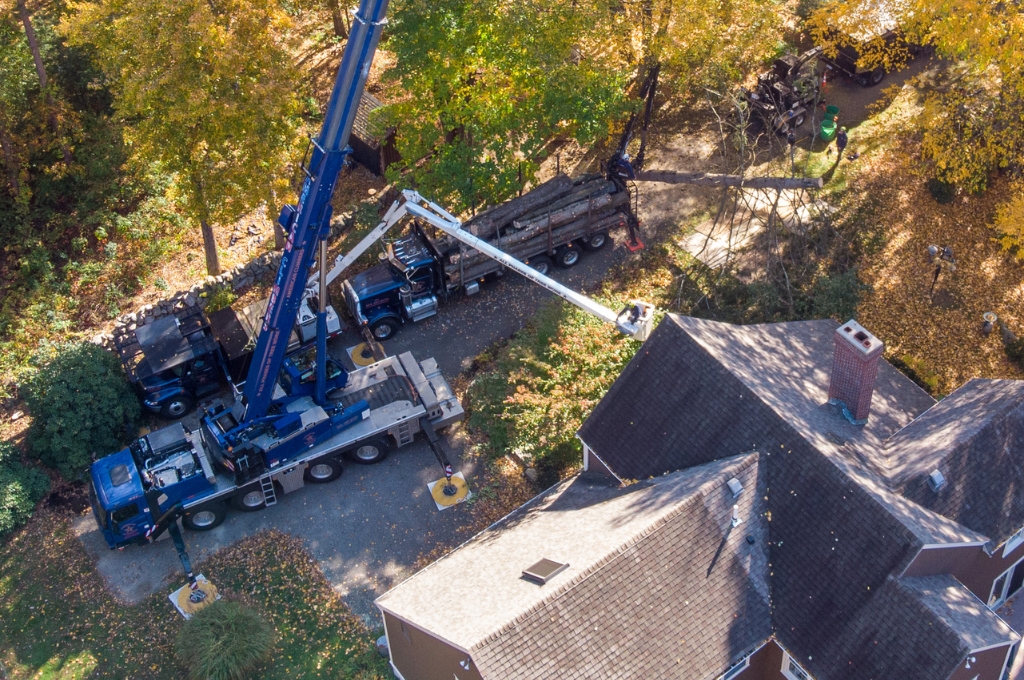
Professional outrigger pads (visible in yellow) distribute crane weight to prevent damage to driveways and lawns.
How American Climbers Protects Your Property During Crane-Assisted Tree Removal
Successful crane-assisted tree removal isn’t just about taking a tree down—it’s about leaving your property exactly as we found it. At American Climbers, we use specialized equipment and proven protection measures to keep your lawn, driveway, and landscape intact from start to finish.
Site Assessments and Damage Prevention Protocols
The most effective way to prevent property damage is to plan ahead. Before equipment ever arrives, our crews conduct thorough site assessments to identify potential risks and map out protection strategies specific to your property.
This includes checking soil conditions, locating underground utilities, measuring clearances to structures, and planning equipment positioning. Sprinkler heads are marked, valuable plantings are noted, and buffer zones are set up around sensitive areas.
During operations, conditions are monitored continuously. If soil softens or mats shift, we pause and adjust before continuing. Prevention always comes first.
Outrigger Pads and Ground Protection Systems
The most important piece of property protection is the outrigger pad system. Cranes use hydraulic outriggers (stabilizing legs) to stay balanced during lifting operations. Without protection, these outriggers create concentrated pressure points that can crack driveways, puncture sprinkler lines, or create permanent dents in lawns.
Professional outrigger pads spread this weight across much larger surface areas. High-quality pads measure 24 inches by 24 inches or larger. They can support 60-120 tons without transferring damaging pressure to the ground beneath. Made from engineered plastic or composite materials, these pads flex to fit ground bumps while staying strong.
In MetroWest’s premium neighborhoods, where lawn care and landscaping represent significant investments, these pads are essential. A quality outrigger pad system prevents the type of damage that could cost thousands to repair and take years to restore.
PRO TIP: The difference between amateur and professional crane work often comes down to ground protection. Quality companies invest in proper outrigger pads because the cost of protection is minimal compared to potential damage claims.
Driveway and Hardscape Protection Methods
Protecting driveways, patios, and walkways needs extra thought. Asphalt driveways are especially vulnerable to damage from heavy equipment, particularly in hot summer months when the material softens. However, hard surfaces, like stone and concrete surfaces, can also crack under heavy loads.
Experienced crews use ground protection mats along with outrigger pads when working on or near hardscaping. These mats are often made from high-density plastic. They create temporary roadways that spread vehicle weight safely. They’re essential when cranes must park on driveways. They’re also needed when equipment needs to cross paved areas.
For valuable hardscaping features common in Weston and Dover properties, crews may use multiple layers of protection. These include natural stone patios, decorative pavers, or antique brick walkways. Crews might also use different equipment positioning to avoid any contact.
Lawn and Landscape Preservation Techniques
MetroWest homeowners often keep perfect lawns and carefully designed landscape beds. Professional tree services protect these investments through smart planning and proper timing.
Ground conditions play a big role in how well protection works. Experienced crews schedule crane work during the best conditions, typically during summer’s dry periods or winter, when frozen ground gives natural protection. Working during wet conditions can lead to ruts and soil packing. This happens even with protection mats.
INDUSTRY INSIGHT: “After many years of crane operations in MetroWest, we’ve learned that proper setup and protection are just as important as the removal itself. Our crews spend extra time positioning outrigger pads correctly because we understand these landscapes represent decades of investment and care.” – Rich Yurewicz, Owner of American Climbers
Around sensitive plantings, crews create buffer zones using extra ground protection. Root systems of valuable specimen trees get special attention. So do established shrub borders and perennial gardens. This prevents soil packing that could damage these long-term investments. Proper tree care goes beyond removal to include the protection of surrounding landscape elements.
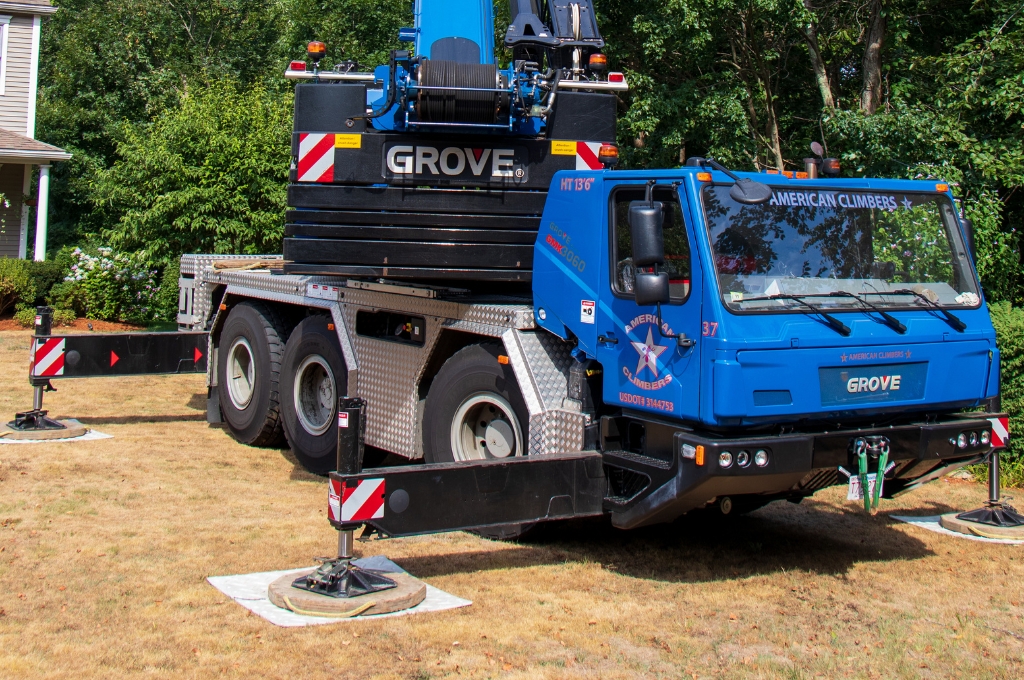
Crane positioned in backyard with outriggers properly deployed on protective pads to prevent ground damage.
Insurance Coverage and Claims Process
Legitimate tree service companies carry substantial general liability insurance specifically designed for tree care operations. Quality companies maintain $1 million or more in coverage with policies that specifically include crane operations and property damage.
This insurance differs significantly from basic landscaping coverage, which typically excludes work above 8-10 feet and doesn’t cover crane operations. Homeowners should always verify that their chosen company carries appropriate tree care-specific insurance before work begins.
If damage occurs, reputable companies handle claims quickly and professionally. The process typically involves immediate documentation, direct communication with insurance carriers, and prompt restoration to original condition or better.
HOMEOWNER PROTECTION: When you work with a tree care company for the first time, ask to see their Certificate of Insurance. A reputable company will be happy to show it to you.
Frequently Asked Questions
Will the crane drive on my lawn?
Professional crews avoid driving on lawns whenever possible. Cranes are typically positioned on driveways, streets, or designated staging areas. When lawn access is unavoidable, crews use ground protection mats and schedule work during optimal ground conditions to minimize impact.
Can placing outrigger pads on my lawn damage it?
Properly sized outrigger pads distribute weight sufficiently to prevent lawn damage when ground conditions are appropriate. Quality pads spread crane weight across 4-6 square feet per outrigger rather than concentrating it on a few square inches, preventing soil compaction and grass damage.
What happens if my driveway gets damaged during crane setup?
Reputable tree services carry comprehensive general liability insurance specifically covering property damage from crane operations. Any damage to driveways, walkways, or hardscaping is documented immediately and restored through the company’s insurance at no cost to the homeowner.
How do you protect expensive landscaping during crane operations?
Professional crews use multiple protection methods, including outrigger pads, ground protection mats, and strategic equipment positioning. Valuable plantings are identified during pre-work assessments and receive buffer zones. Work is scheduled during optimal conditions when protection systems are most effective.
What if something goes wrong during the removal – who pays for the damage?
Licensed, insured tree services are financially responsible for any property damage caused during crane operations. Quality companies carry $1 million or more in general liability coverage and handle damage claims quickly through their insurance carriers without homeowner expense.
How should I prepare my property before crane tree removal?
Remove vehicles, outdoor furniture, and valuable items from the work area and crane positioning zones. Clear access routes for equipment and identify any underground utilities or irrigation systems. Your tree service will provide a specific preparation checklist during the estimate process.
What makes crane tree removal safer for my property than traditional methods?
Crane removal eliminates the unpredictability of tree felling, where entire trees or large sections fall with tremendous force. By lifting sections vertically and placing them precisely, cranes provide complete control over where tree material goes, protecting structures, landscaping, and neighboring properties.
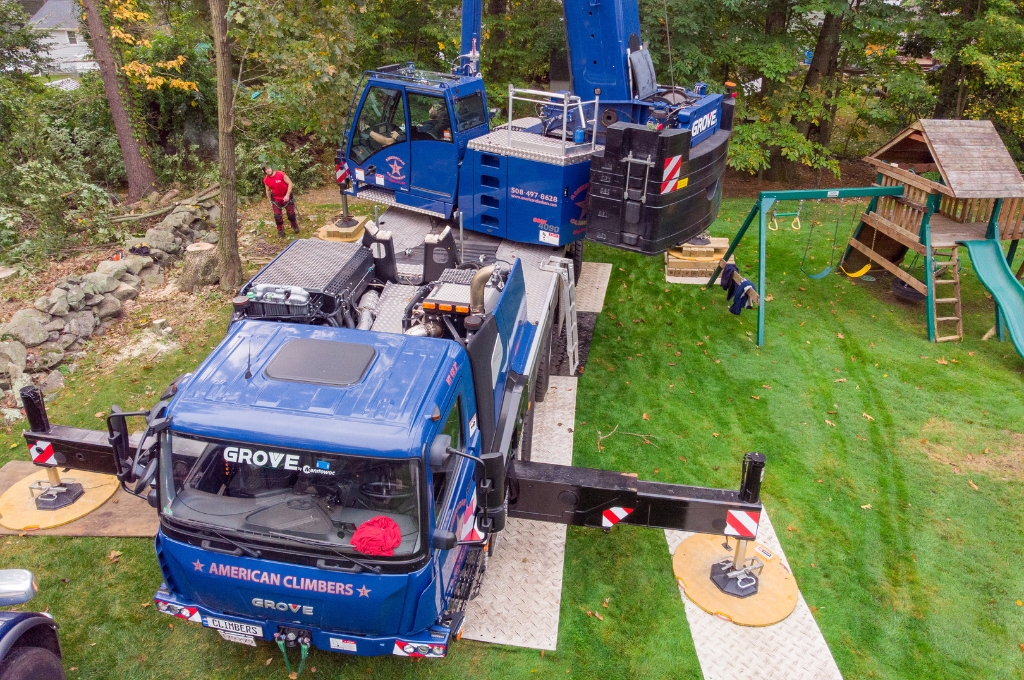
White outrigger pads are clearly visible, protecting this homeowner’s lawn from crane weight during tree removal.
Protecting Your MetroWest Investment
The October 2024 crane accident in nearby Sudbury showed what can happen when tree work isn’t handled by trained professionals. A crane tipped over on Sycamore Road, damaging property and injuring the operator – proof that proper setup, licensing, and safety protocols matter.
Ready to protect your MetroWest property while safely removing problem trees? American Climbers has over 25 years of experience providing professional crane-assisted tree removal throughout Wellesley, Wayland, Weston, Dover, Natick, and surrounding communities. Call us today at 508-497-8628 or request your estimate online.
Blog Topics
Recent Posts


What's Happening? Stay Informed!
Stay on top of local events, pest and disease updates, tree and landscape tips, and more. Delivered straight to your inbox each month.