

Parts of southeastern New England picked up as much as three feet of snow and experienced wind gusts that surpassed 90 miles per hour during the February 2026 blizzard. Massachusetts spent weeks cleaning up the tree damage and remedying the consequential power outages. With another winter just around the corner, trees that are already weakened, damaged, or unstable may be more vulnerable when heavy snow, ice, and strong winds return.
If you’ve noticed a leaning tree, cavity, or cluster of dead branches on your Milford property, fall is a good time to determine whether the problem can wait or if hazard tree removal should happen before winter.
Key Takeaways
- Dead branches, a worsening lean, exposed wood, cavities, and other structural changes are reasons to have a tree evaluated, but they don’t automatically mean it needs to be removed.
- Waiting until spring can leave an already weakened tree exposed to months of snow, ice, wind, and winter storms.
- The urgency depends on the severity of the defect, whether it’s changing, and what the tree or branch could hit if it fails.
- An arborist can determine whether the tree should be removed before winter or whether pruning, support, or monitoring can reduce the risk.
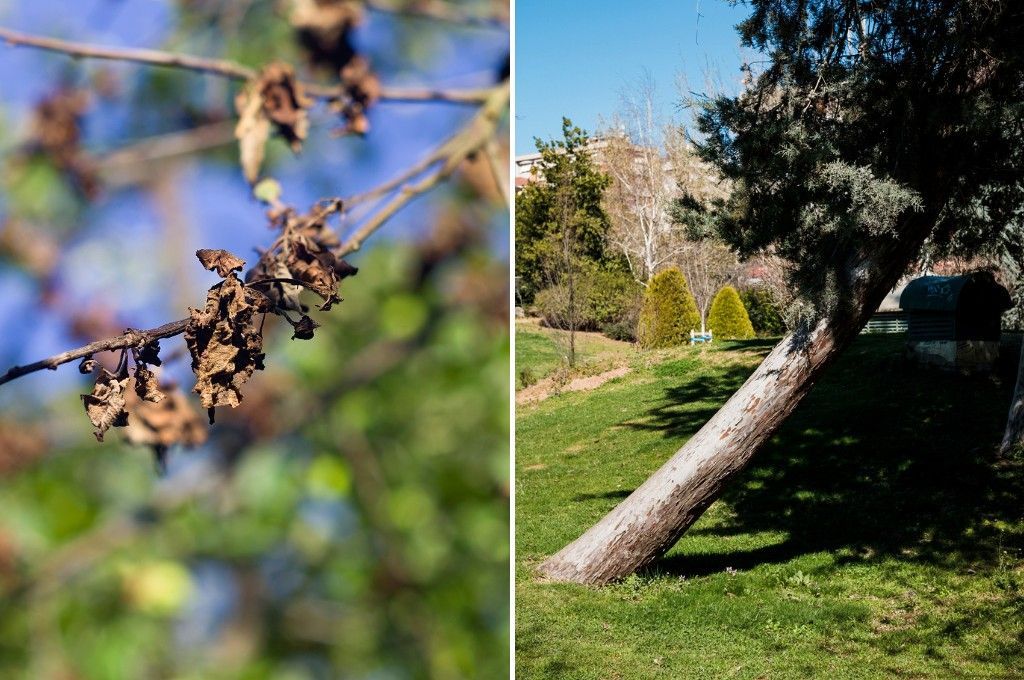
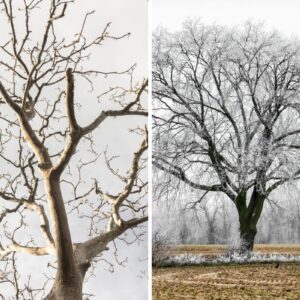
Dead foliage and a new or worsening lean are two of the warning signs worth checking for before winter.
What Are the Warning Signs of a Hazard Tree?
A hazard tree typically shows one or more of these warning signs:
- Dead Branches Over Structures : Leafless, brittle branches positioned over a roof, driveway, deck, or path carry real consequences if they fail, and a section of canopy that never leafed out during the growing season is a clear sign of deadwood.
- A Severe or Worsening Lean : A lean that’s new or has increased, especially after wind or heavy rain, is a different problem than a lifelong stable lean that hasn’t changed.
- Bark Damage That Exposes Wood :Large areas of missing bark can weaken the trunk and leave it vulnerable to decay. Fresh, raw wood underneath may indicate the damage is recent and still affecting the tree.
- Large Cavities: Hollow sections at the base or trunk, especially ones with visible fungal growth, indicate internal decay, and the cavity’s size relative to the trunk’s circumference matters more than the fact that a cavity exists at all.
When multiple dead branches appear in the same area of a tree, the problem may extend beyond a single limb. Because dead wood is more prone to breakage concentrated dieback can point to a larger problem affecting that portion of the canopy.
Can Hazard Tree Removal Wait Until Spring?
It may seem like waiting for warmer spring weather would make tree removal easier. But if a tree is already showing signs of instability or decline, waiting means sending it through an entire Massachusetts winter before finding out how serious the problem is.
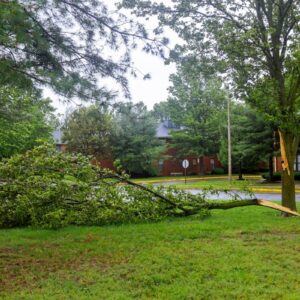
A tree with structural weaknesses is more vulnerable to failure during storms. If it does fail, what could have been a planned removal can become an emergency involving a fallen tree, property damage, blocked access, or other complications.
That doesn’t mean every questionable tree needs to come down this fall. An arborist may determine that it’s stable enough to monitor or that another corrective measure can reduce the risk. The important part is making that determination before winter rather than assuming the tree can safely wait until spring.
Why Does Winter Increase the Risk of Hazardous Trees?
Winter enhances the risk of many defects, particularly through extra weight and decreased flexibility:
- Added Weight From Ice and Snow : Ice accumulation can increase the weight of a tree’s branches by up to 30 times. A branch that’s already compromised by decay, a crack, or a weak union has far less capacity to carry that kind of load before it gives way.
- Cold Weather Makes Wood Brittle : Wood that bends under load during warmer months turns stiff once temperatures drop, making it more likely to snap under an ice or snow load instead of bending.
Winter weather doesn’t create every structural weakness, but it can expose one that was already there. A branch or trunk that handles normal conditions may respond very differently once it’s carrying additional ice or snow during strong winds.
How Does an Arborist Decide Whether a Hazard Tree Needs Removal?
A tree can look concerning without actually needing to come down. During a hazard assessment, an arborist looks beyond the most obvious defect to determine whether the tree is likely to fail and what could be damaged if it does.
That means considering:
- How Serious the Defect Is: The size, location, and extent of decay, cracks, cavities, deadwood, or root damage all affect the tree differently.
- Whether the Problem Is Getting Worse: A lean that has remained unchanged for years is different from one that appeared after a recent storm or continues to increase.
- How Much Healthy Structure Remains: An arborist considers whether the trunk, roots, and major limbs can still adequately support the tree.
- What the Tree Could Hit: A weakened tree beside a home, driveway, utility line, or frequently used area creates more risk than one with nothing nearby.
Removal is generally reserved for trees where the risk can’t be reduced enough through pruning, cabling or bracing, or continued monitoring. If the tree can be safely preserved, removal may not be necessary. If its structure has deteriorated beyond a reasonable point, removing it before winter prevents snow, ice, or wind from making that decision for you.
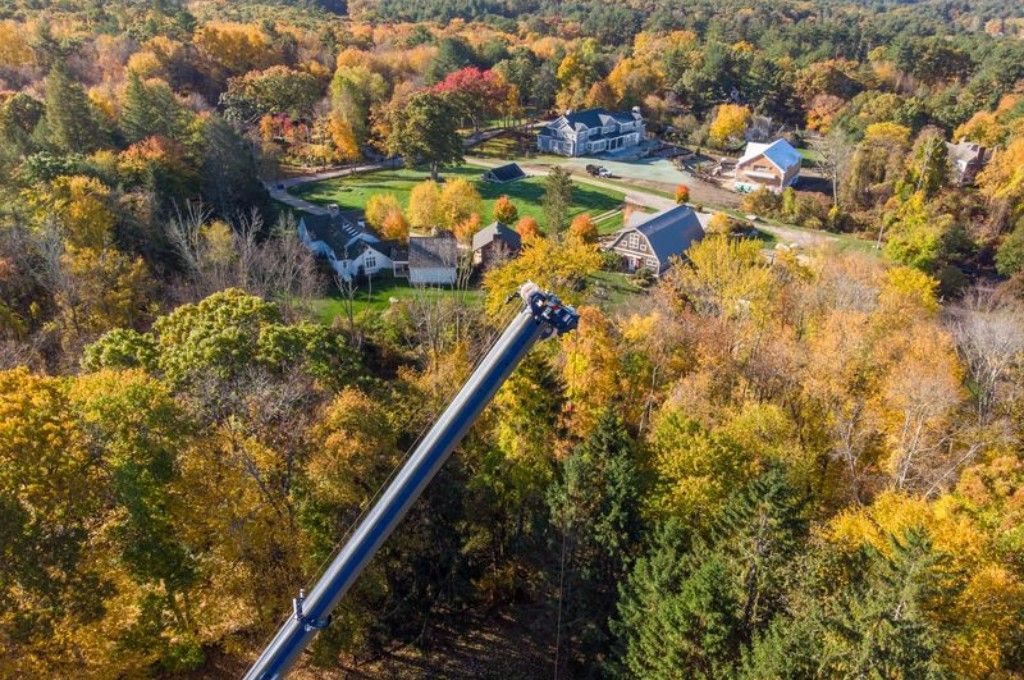
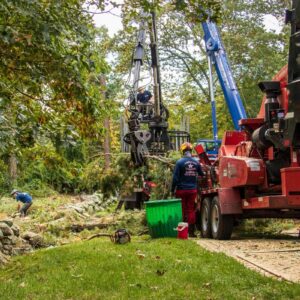
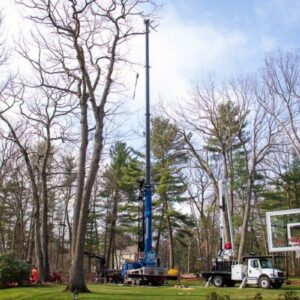
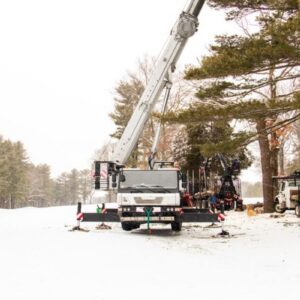
A crane is one of the tools crews use for controlled removals like this, chosen when a tree’s size or location calls for it.
Frequently Asked Questions About Hazard Trees
What happens during a professional tree risk assessment?
A tree care professional inspects the trunk, root flare, and canopy for defects like cracks, decay, and weak branch unions, then flags anything positioned to cause real damage if it fails. It’s a visual and sometimes physical assessment, not a lab test, so you typically get a straightforward yes-or-no on urgency during the visit itself.
Will my homeowners insurance cover a hazard tree removal?
Coverage varies by policy and insurer, which is why you should contact your provider directly to find out whether hazard tree removal is covered before assuming either way.
How can I tell if a crack or cavity is serious enough to worry about?
Not every crack or cavity means a tree is unstable. More concerning signs include a crack that extends deep into the trunk, a cavity with soft or decaying wood, fungal growth, or multiple defects in the same area. If the damage is getting larger or appears near the base of the tree or a major branch attachment, have an arborist evaluate how much healthy wood remains and whether the tree is still structurally sound.
Is fall tree removal cheaper than waiting until spring or calling after a storm?
Tree removal cost depends more on the tree’s size, condition, location, and difficulty of the job than the season. The bigger difference is between a planned removal and an emergency call. After a storm, limited crew availability, added hazards, and the urgency of the work can mean longer wait times and a premium price. Scheduling a hazardous tree removal in fall gives you more time to plan before winter weather turns an existing problem into an emergency.
Does a few dead branches mean the whole tree needs to come down?
Not necessarily. If the rest of the tree is healthy and structurally sound, a small amount of deadwood can sometimes be addressed with pruning instead of removal. But deadwood spread across a large part of the canopy, or paired with a lean, cavity, or bark damage, usually points to a tree that’s declining rather than one limb with an isolated problem.
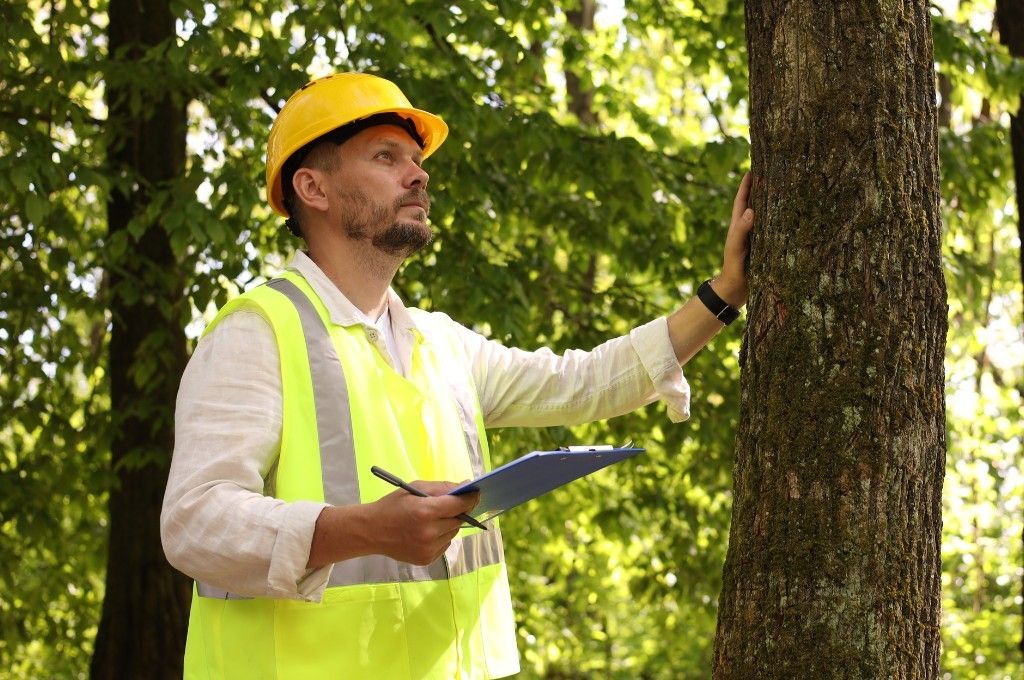
When a defect is paired with a target, it’s worth having a tree care professional take a closer look.
Let American Climbers Take a Look at Your Trees Before Winter Comes
You don’t have to decide on your own whether a leaning tree, cavity, dead branches, or other damage is serious enough to require removal. American Climbers can assess the tree, determine how much risk it poses, and recommend whether it should be removed before winter or can be safely monitored.
If something about a tree on your Milford property has you concerned, don’t wait for the first heavy snow or winter storm to find out how serious it is. Request a quote this fall or call us at 508-497-8628 and have it evaluated while there’s still time to address the problem before winter.
Blog Topics
Recent Posts
What's Happening? Stay Informed!
Stay on top of local events, pest and disease updates, tree and landscape tips, and more. Delivered straight to your inbox each month.